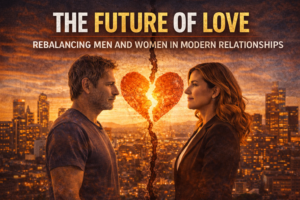

Something fundamental has shifted in the relationship between men and women.
More adults are single than at any other point in modern history. Marriage rates are declining across much of the developed world. Birth rates are falling. Dating apps have turned romance into a digital marketplace, and many people report feeling more frustrated and disconnected in dating than ever before.
At the same time, a surprising pattern has begun to emerge in conversations among women—especially educated, successful women.
Many of them are asking the same question:
Why has it become so difficult to find men who are ready, capable, and willing to build meaningful relationships?
For decades, society focused on empowering women—and rightfully so. Women fought for equal opportunity, education, financial independence, and professional advancement. Today’s women are stronger, more capable, and more independent than any generation before them.
But every major social revolution produces unintended consequences.
While women were rising rapidly in education, careers, and economic independence, men were experiencing a very different trajectory. In many areas—education, workforce participation, and even social engagement—men have been quietly falling behind.
The result may be a cultural imbalance that neither gender fully anticipated.
Modern women are more accomplished and self-sufficient than ever before. Yet many say their dating experiences have become more frustrating, confusing, and emotionally draining.
Meanwhile, many men appear uncertain about their role in a rapidly changing social landscape. Some are disengaging from dating altogether. Others seem stuck in prolonged adolescence, avoiding the responsibilities that once defined adulthood.
Add dating apps, social media, shifting gender expectations, and the growing education gap between men and women—and the entire dating ecosystem begins to look very different from what previous generations experienced.
This series explores a question that many people are beginning to ask quietly but few are discussing openly:
Have modern cultural shifts unintentionally created a new imbalance between men and women—and is that imbalance reshaping the future of relationships?
Over the next six articles, we’ll explore the forces transforming modern dating.
In Part 1, we examine the growing masculinity crisis and why many successful women say they are struggling to find men on their level.
In Part 2, we dive into the surprising economics of dating, exploring research from Jon Birger’s book Date-onomics and how simple supply-and-demand dynamics are reshaping the dating market.
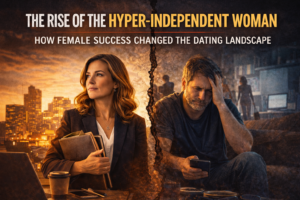
In Part 3, we explore the rise of the hyper-independent woman—and the paradox that independence has created in modern relationships.
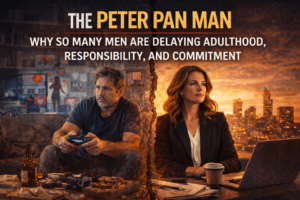
In Part 4, we examine the cultural phenomenon of the “Peter Pan Man,” looking at why many modern men appear to be delaying adulthood, commitment, and responsibility.
In Part 5, we investigate how dating apps and social media transformed romance into a gamified marketplace—and why that shift may be making relationships harder to form.
Finally, in Part 6, we look toward the future: what a healthier balance between men and women might look like, and how both sexes might rediscover partnership in a rapidly changing world.
This series is not about blaming men or criticizing women.
It’s about understanding the cultural forces reshaping relationships—and asking whether the current trajectory is truly working for either gender.
Because beneath all the statistics, social movements, and changing expectations, most people still want the same thing they always have:
Connection.
Partnership.
Love.
The real question is whether modern culture is helping men and women find those things—or quietly making them harder to reach.
Let’s explore what’s really happening.